Disclaimer: this is a member-facing explainer about how we describe ourselves. It is not legal, tax, or securities advice, and it is not a claim that TrueSight is a cooperative corporation under any specific statute. When you need a formal label, talk to qualified counsel in the relevant jurisdiction.
Why bother with two comparisons?
People arrive at TrueSight with two noisy priors. Some hear DAO and imagine token volatility, influencer governance, and vibes-first roadmaps. Others hear cooperative economics and picture bylaws, member meetings, and patronage refunds on a single storefront. TrueSight borrows pieces from both worlds while refusing to be a caricature of either. The whitepaper section “Sweat equity, cooperatives, and the DAO label” now states this in handbook tone; this post is the longer blog companion.
What we mean by “cooperative profit sharing” here
In plain language: people contribute real work and real capital, ventures try to earn revenue over time, and the community maintains open accounting so rewards can be argued about with receipts instead of folklore. Governance tokens (TDG) are a ledger-first accounting layer for that story — not a day-traded product narrative. Mechanisms, limits, and seasonal governor review are documented in the TrueSight DAO whitepaper under Tokenomics, Ledger, and Treasury. Day-to-day contribution reporting flows through the DAO web app; live balances and history sit on the contributions record (ledger); the scoring table is the public rubric.
Similarities to a traditional cooperative
- Member economics, not anonymous exit liquidity. A large share of long-term participants joined through labor, trust, and repeated coordination — closer to “owner-workers showing up” than to faceless flippers.
- Surplus tied to operations. The through-line in our handbook is still boring commerce: inventory, shipments, compliance, and the kinds of mistakes that show up in spreadsheets.
- Democratic input on rules and allocation. Proposals, assemblies, and token-weighted votes exist to resolve real forks in policy and treasury — when members use them.
Differences from a traditional cooperative
- Global, distributed membership by default. Many co-ops are anchored in one geography and one legal entity; TrueSight’s coordination stack mixes chat, DAO web app flows, the ledger, and public movement / transaction records across time zones.
- Hybrid “OS,” not only meetings. Formal co-ops often centralize legitimacy in member meetings and bylaws amendments. We still need human judgment — especially governors and executors — but much daily truth lives in operational channels and verifiable logs as much as in a gavel.
- Token rubric as explicit scoring surface. Traditional co-ops have wage and patronage rules; we expose a rubric and ledger that attempt to make trade-offs legible. That is a design choice with known failure modes (gaming, dispute, fatigue) — not magic.
Similarities to a “traditional Web3 DAO”
- Public governance surface. Proposals, votes, and open GitHub repositories are part of how we narrate and decide.
- Token-weighted voice on some questions. TDG still matters for policy and treasury decisions as described in the handbook and tokenomics materials.
- Transparency as a norm. We publish operational and impact data where we can (for example roadmap and the record pages in the site footer); the point is to reduce insider advantage, not to perform virtue.
Differences from a “traditional Web3 DAO”
- Ledger-first TDG, not a speculative headline. The whitepaper is explicit: TDG is recorded on the community ledger; members are not asked to treat public DEX mechanics as the center of gravity for accounting today. Automated scoring flows through Edgar before governor review.
- Anti-governance-theatre as an aspiration, not a guarantee. Loud forums are cheap; pallets, invoices, and incident response are expensive. We fail like any human group — the institutional bet is that receipts and executors keep honest score over time (see the companion essay on sweat equity and execution).
- Profit language tied to ventures, not only to narrative. When we talk about buy-back and withdrawal, we point at documented flows in the handbook (Treasury, ledger-based buy-back and withdrawals) and the in-app withdraw voting rights flow rather than implying that attention itself mints value.
Closing: two mirrors, one boring job
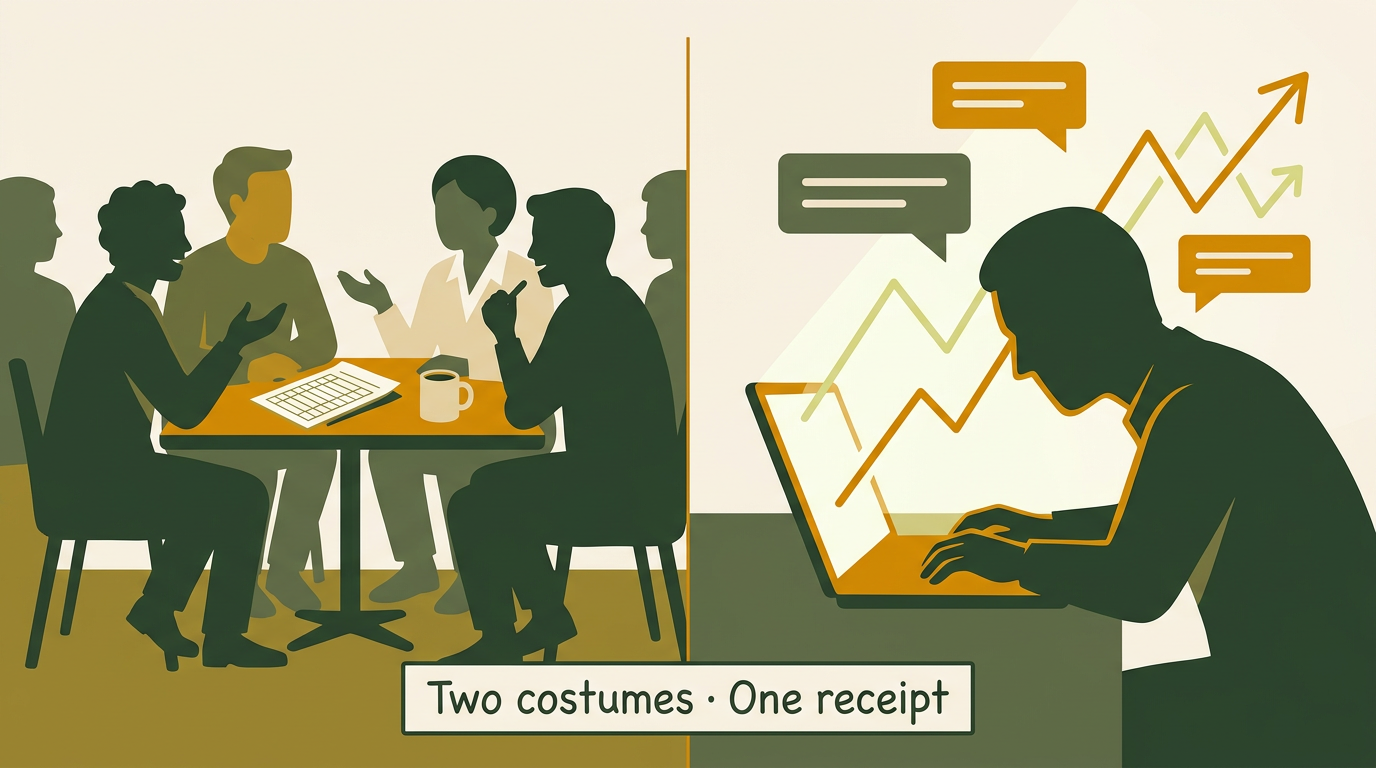
Co-ops and Web3 DAOs are both partial mirrors — useful because they name real traditions (solidarity finance, open coordination) and dangerous when treated as costumes. TrueSight’s job remains the same: ship regenerative commerce (see Agroverse), record contributions honestly on the ledger, and vote when forks are real via proposals. If this framing is wrong somewhere, the productive response is a proposal with evidence — not a flame war.
Join the discussion
Push back with examples: Telegram, the DAO web app, and the contributions record where receipts belong.